

The Teacher in the Machine: What AI Reveals About How Lawyers Learn
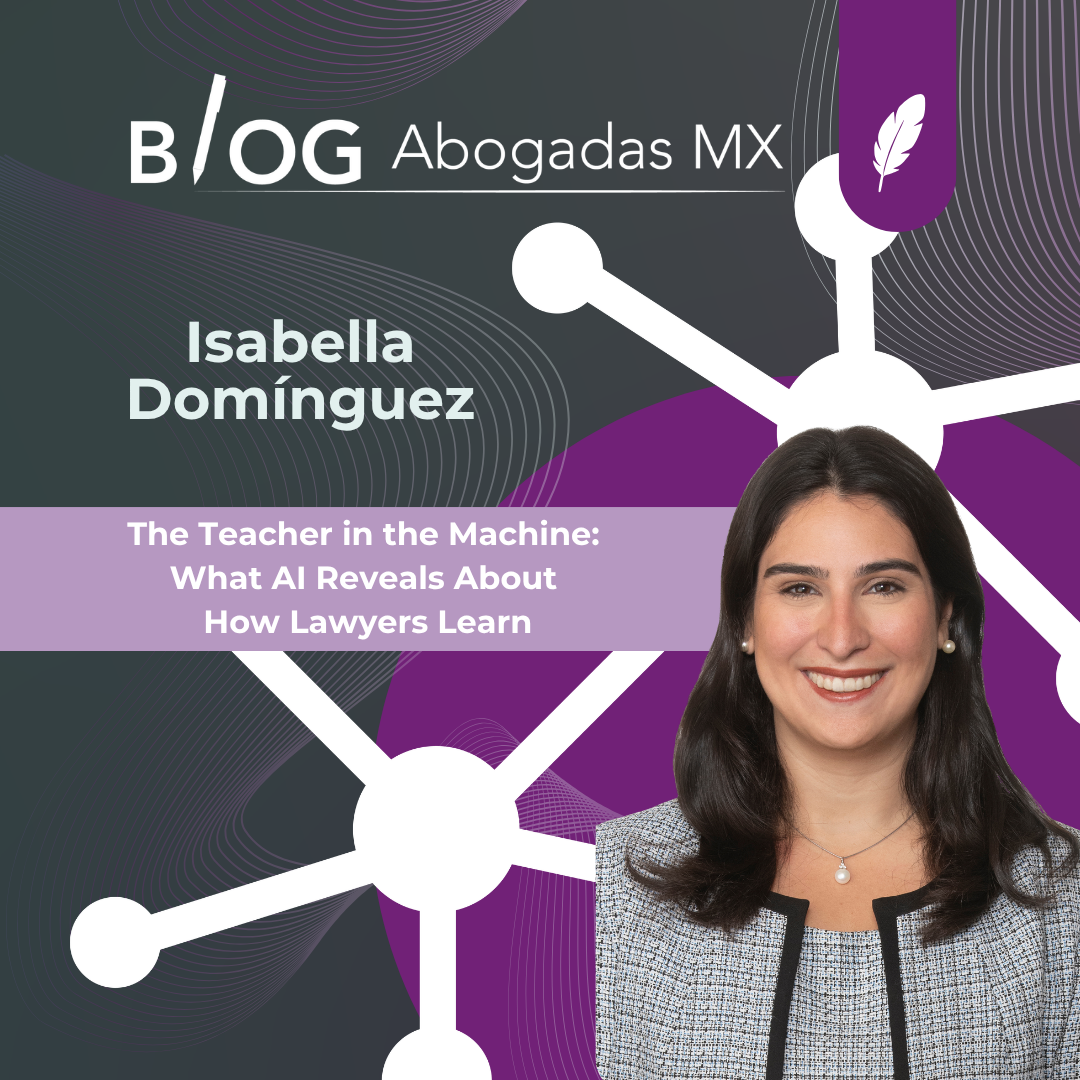
I didn’t start in law — I started as a teacher. Five years, including Rwanda and Madrid, shaped how I think about learning: not as information transfer, but as creating conditions for someone to understand something for themselves.
Education was sacred in my family — and it was the women who set the tone. My Colombian grandmother made it her goal to graduate before her life was over — she did, at 80. My Cuban grandmother's family lost everything when they left, but she always said: you can take everything from a person except their education.
That belief followed me into law — and into a legal career in New York City, where I continue to practice.
Law school teaches you how to think — not how to practice. It doesn’t teach you how to mark up a credit agreement, manage a closing, negotiate an M&A deal, or recognize when a deal is going sideways. That knowledge isn’t in casebooks. It’s learned on the job.
And that’s where the profession has always struggled — and where AI may start to make a difference.
How lawyers actually learn
In practice, learning happens in the margins — in redlines, quick comments, and moments when you decide whether to ask a question. Deals are moving, and no one wants to ask what sounds like a basic question.
Over time, that creates a gap. Learning becomes inconsistent and dependent on proximity to the right people. This isn't a personal failure — it's structural. The system wasn't designed to teach; it was designed to do.
The less time we spend teaching, the less we develop the people around us — and problems surface later than they should.
This gap is not felt equally. Those who are newer, less networked, or less likely to be pulled into informal conversations — including many women in the profession — often have less access to the mentorship that quietly accelerates careers. It shapes who stays, who advances, and who doesn't.
A different kind of colleague
AI becomes interesting here — not just as a tool, but as something closer to a colleague.
I use it as a sounding board — a right-hand woman, a first draft of a thought. I’ve even named mine. She has no ego, no competing priorities, and no need to be the smartest person in the room.
It’s always available, works on your time, doesn’t mind basic questions, and doesn’t need to log off for dinner. Used intentionally, it becomes a place to think out loud.
What has worked for me: I tell it who I am (my role, level, perspective), who it is (partner, client, thought partner), and what I need (format, depth, audience). That structure changes everything. The responses become far more useful.
What it does well — and what it doesn’t
AI is very good at summarizing, organizing, drafting first versions, and spotting patterns. But it does not have judgment. It doesn't understand client nuance or read a room. Those things still belong to people.
It can also be wrong — and often sounds very confident when it is. Which means it has to be treated like any junior work product: reviewed, questioned, and refined.
It's a powerful colleague — but still one you need to supervise.
Thinking, prompting, and learning
Using AI well is not passive. It’s a conversation — you ask why it approached something a certain way, ask it to revise, challenge it. It doesn’t take feedback personally, which already makes it easier to work with than most of us on a deadline.
Prompting is about clarity. If you can’t explain something clearly, you don’t fully understand it — that’s as true in law as in teaching.
But it also works in reverse — if you don’t understand something, use AI to get there. Ask basic questions, refine as you go, build your understanding.
Why this matters for how we train lawyers
This mirrors a core teaching model: demonstrate, work through together, do independently. AI fits each stage — see how something is approached, interact with the reasoning, take ownership yourself.
There's a concern that tools like this reduce rigor. They can — if used poorly. But used well, they reduce time spent on mechanical tasks, create more space for substance, and more space to teach.
Lawyers are lifelong learners — whether they're one year in or twenty. When people feel supported, they take more ownership and grow faster.
Getting comfortable with it
I didn’t start with legal work. I used AI for low-stakes things first — doctor follow-ups, bank requests, cancellations — to understand how much direction it needs and where it goes wrong.
Like anything else, there’s a learning curve. But the upside is real.
The lawyers who adapt most naturally are not always the most technical — they're the ones who stay curious and treat new tools carefully at first, then with confidence.
The teacher was always the point
The challenge is the same whether you're in private practice, in-house, or in government: how do people learn, and how do we help them learn better?
AI doesn’t replace judgment, experience, or human relationships. But it can accelerate how we get there.
At its best, AI functions the way a good teacher does — not by giving answers, but by helping you get to them faster. The lawyers who learn to use it that way — not as a shortcut, but as a way to think, learn, and teach more effectively — will have a real advantage.
*El contenido de este artículo es publicado bajo la responsabilidad de su autora y no necesariamente refleja la posición de Abogadas MX.